
 0
0
 0
0
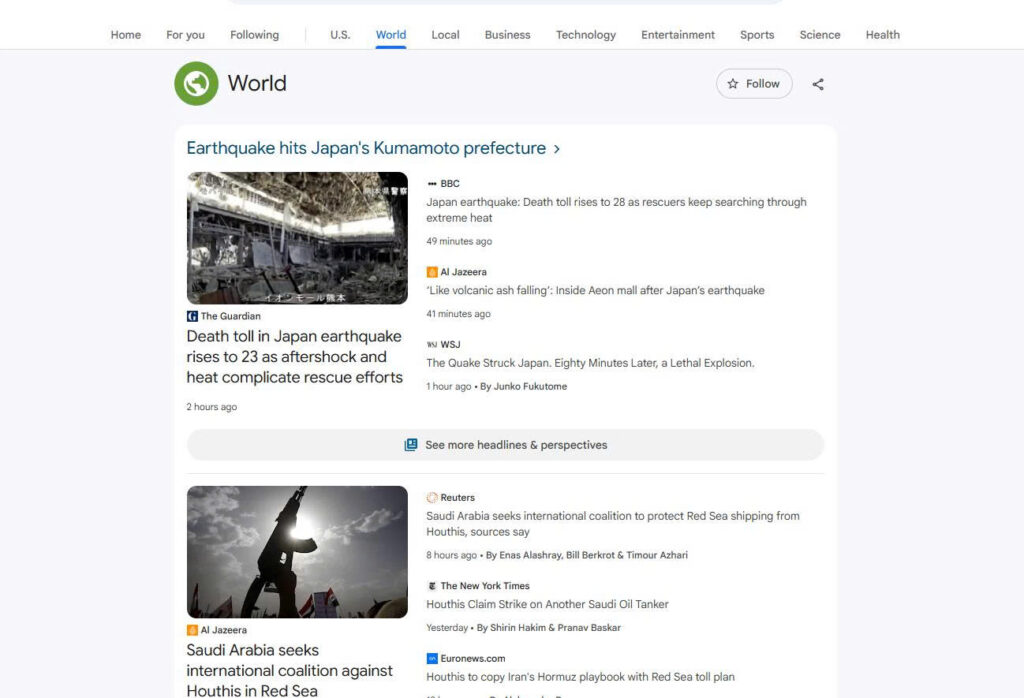
When a massive global event occurs – such as a catastrophic IT outage, an international climate summit, or the Olympic Games – the sheer volume of information generated is overwhelming. To make sense of this data, digital newsrooms and content aggregators instinctively compartmentalize the event into narrow “Subjects” or “Categories” (such as Business, Tech, Politics, or Local News).
Many readers operate under the illusion that reading the top story on their favorite news app gives them the full picture. In reality, the category tag you click acts as a strict editorial filter. It dictates the narrative angle, determines which experts are interviewed, and filters which data sets are presented. If you rely solely on one specific subject category to follow a multi-dimensional global event, you will inevitably fall victim to the “Silo Effect,” consuming a heavily skewed and incomplete version of reality.
To build a comprehensive, 360-degree understanding of major events, readers and researchers must learn to decode media framing, cross-reference categorical silos, and deploy advanced tracking strategies.

The anatomy of media framing through subject tags
In journalism, “framing” refers to how a news organization packages and presents information to influence audience perception. On digital platforms, subject tags are the architectural building blocks of framing.
The first step in decoding coverage is distinguishing between human-assigned editorial tags and algorithm-assigned tags. A tag assigned by a human editor signals deliberate narrative intent—they are intentionally shaping the story for a specific demographic. Algorithm-assigned tags, however, often cluster keywords blindly, grouping unrelated articles together simply because they share a noun, which can lead to disjointed reading experiences.
The comparative framing scenario
To understand how severely subject tags alter reality, consider the hypothetical scenario of a “Global Cyber Outage” caused by a flawed software update. Notice how differently the exact same event is framed across three standard newsroom categories:
- The Technology Section: Here, the coverage focuses on the root cause. Articles detail the specific software bug, the timeline for patch deployments, server rollback procedures, and the broader implications for global cybersecurity vulnerabilities.
- The Business Section: The software bug is barely mentioned. Instead, the narrative focuses exclusively on financial fallout. Articles highlight plummeted stock prices of the software company, disrupted global supply chains, massive revenue losses for grounded airlines, and potential class-action lawsuits from shareholders.
- The Local News Section: Macro-economics and coding are irrelevant. The coverage is entirely on-the-ground, focusing on stranded passengers sleeping at a specific regional airport, local emergency 911 dispatch centers going offline, and interviews with frustrated citizens.
None of these categories are reporting “fake news,” but none of them are telling the whole truth either. They are merely presenting a specialized slice of the event.
Breaking out of information silos for comprehensive research
To construct an accurate timeline and factual summary of a global event, you must actively break out of these pre-defined information silos.
Assessing the scope and depth of a subject category
Before committing to a specific coverage feed, evaluate the category’s depth. The quickest metric for assessment is the article count and publication frequency.
If you visit a major news site during a global climate summit and notice the “Environment” tab contains only two brief summaries, while the “Politics” tab features fifty in-depth articles spanning several weeks, the platform’s editorial board is treating the summit primarily as a political battlefield rather than an ecological one. A category with sparse entries covers only a narrow aspect of the event, whereas a heavily populated category indicates where the core journalistic resources are currently deployed.
Aligning the narrative angle with your specific objective
Your approach to consuming category-siloed news should align with your ultimate goal. If your goal is casual personal awareness, sticking to your preferred niche (e.g., following an international summit purely through the “Tech” lens because you work in IT) is perfectly acceptable, provided you recognize the inherent bias.
However, if your goal is academic research, corporate risk analysis, or true journalistic understanding, you must execute a cross-pollinated reading strategy. You must deliberately read articles from the Business, Politics, and Tech categories simultaneously. The overlap and contradictions between these subjects often reveal the most critical, nuanced truths of the event.
The danger of shifting labels as breaking news evolves
A common mistake made by casual readers is assuming that a single subject label will cover an entire event from its inception to its conclusion. In digital newsrooms, the subject tag is rarely static; it evolves alongside the news cycle.
Consider the lifecycle of a major natural disaster. In the first 48 hours, the event is categorized squarely under “Breaking News” or “World News,” focusing on death tolls and immediate rescue efforts. A week later, the narrative shifts, and the event moves to the “Economics” section to discuss recovery funding and insurance payouts. Months later, the event migrates entirely to the “Politics” section as government inquiries and infrastructure negligence trials begin.
If you only bookmarked the original “World News” tag, your feed will eventually go silent on the topic, leading you to believe the story ended. Relying solely on category tags guarantees you will be cut off from long-term, systemic analysis.
Tactical strategies for multi-dimensional event tracking
To bypass the constraints of digital newsrooms and algorithmic silos, researchers must employ proactive tracking strategies.
Utilizing raw keyword searches over category navigation
The most effective way to shatter an information silo is to abandon category navigation menus entirely. Do not click on the “International News” tab to find updates on a treaty. Instead, utilize raw, specific keyword searches using the event’s exact name (e.g., “Paris Climate Accord 2024”).
A raw search bypasses editorial silos, forcing the platform to surface every article related to the keyword, regardless of whether it was filed under Politics, Business, or Science. This provides a raw, unfiltered chronological feed of the event.
Setting up multi-topic automated alerts
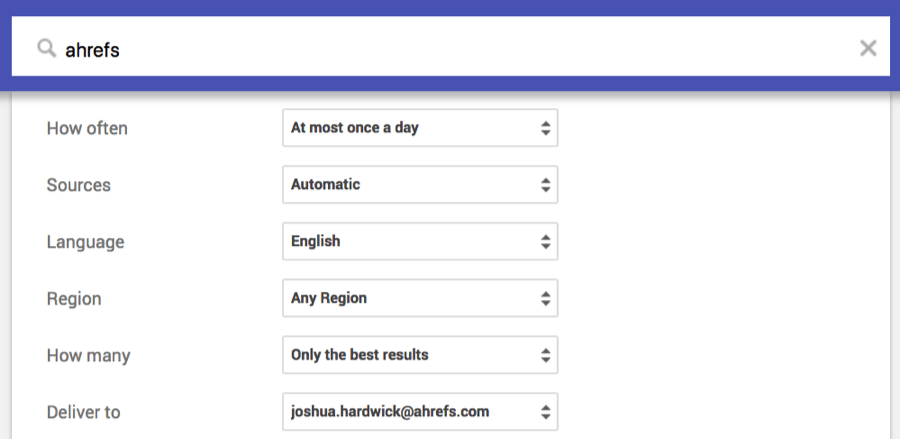
For ongoing, multi-dimensional global events, do not rely on manual searches. Employ automated aggregation tools to do the heavy lifting. By setting up customized Google Alerts, you can track the same event across disparate fields simultaneously.
Instead of creating one broad alert for the event name, create specific, multi-topic queries:
- Alert 1: “Event Name” + “economy” OR “markets”
- Alert 2: “Event Name” + “cybersecurity” OR “software”
- Alert 3: “Event Name” + “government response”
This tactical approach guarantees that whenever a new angle breaks, regardless of which digital silo it originates from, you will capture the full scope of the narrative instantly.


